Dubai has long understood that the right regulatory environment is as powerful an asset as any skyline. Its visa framework has been one of the most quietly consequential tools in its economic arsenal — a mechanism that has helped transform the emirate from a transient business hub into a place where the world’s most mobile individuals choose to plant roots. The latest update to its property-linked residency rules is, in that context, less a surprise than a natural evolution. But the implications are significant, and for investors watching the market, worth understanding clearly.
What Has Changed: Dubai’s Two-Year Property Investor Visa, Updated April 2026
The Dubai Land Department (DLD), through its integrated Cube platform, has revised the eligibility criteria for the two-year property investor residency visa. The headline change is straightforward: the previous minimum property value threshold of AED 750,000 for individual buyers has been removed entirely.
Under the updated rules, any sole owner of a property in Dubai — regardless of that property’s value — is now eligible to apply for a two-year residency visa, provided ownership is formally registered and the title deed is issued within the emirate. There is no floor. No minimum price. If you own it outright and your name stands alone on the deed, the door to residency is open.
For jointly owned properties, a more structured threshold applies. Each co-investor must hold a share valued at no less than AED 400,000 to qualify independently. This applies even where ownership is divided equally between partners, meaning a property valued at AED 800,000 split between two buyers would satisfy the requirement — a scenario that previously fell short of the old single-owner threshold. The rule is carefully constructed: it widens access without removing accountability, ensuring every applicant holds a meaningful stake in the asset.
For mortgaged or instalment-plan properties, a No Objection Certificate (NOC) from the bank or developer remains a requirement, confirming the outstanding balance and amount paid to date. This condition brings transparency to financed transactions and ensures applicants demonstrate genuine equity in their investment.
Key Rule Changes
The Broader Framework: Where the Two-Year Visa Sits in Dubai’s Residency System
It is worth placing this change within Dubai’s wider residency landscape, which has expanded considerably since the UAE’s visa overhaul in 2019.
The system currently offers three principal property-linked residency routes in Dubai:
• Two-year investor visa — now revised: no minimum for sole owners, AED 400,000 per share for joint owners
• Golden Visa (10 years) — requires a minimum property investment of AED 2 million
• Retirement Visa (5 years) — for those aged 55+, qualifying via property, savings, or income
Where the Golden Visa grants decade-long residency to high-value investors, the two-year visa has always served as the entry-level gateway: an accessible first step for buyers who have committed to Dubai’s market without yet reaching the thresholds of the longer-term schemes.
Notably, a separate policy change issued in February 2026 also removed the AED 1 million upfront payment requirement previously tied to Golden Visa eligibility through property, meaning investors can now qualify based on the total value recorded in their title deed or Oqood contract. Taken together, these revisions represent a comprehensive recalibration of Dubai’s property-residency framework — one designed to remove friction at every tier of the market.
Why Now, and Why It Matters for Dubai’s Real Estate Market
Timing is rarely incidental in policy. Dubai’s residential market recorded AED 138.7 billion across 44,150 transactions in the first quarter of 2026 alone — a performance that underscores sustained momentum even against a backdrop of global economic uncertainty. With more than 50,000 units anticipated for handover across the city in 2026, the supply pipeline is substantial. The visa change arrives, in part, as a considered measure to ensure the buyer pool is deep enough and broad enough to absorb that incoming stock.
But the implications extend well beyond supply management. By removing the price floor for sole owners, Dubai has fundamentally shifted who can access residency through property:
• First-time investors entering the Dubai real estate market at any price point
• Buyers of studio or one-bedroom units in communities such as Business Bay, Dubai Marina, Jumeirah Village Circle, and emerging neighbourhoods
• Younger, internationally mobile professionals committing to Dubai as their primary UAE residence rather than a second home
• Co-investors who can now pool resources and each qualify for independent residency rights from a single jointly owned asset
For developers and international investors choosing between global real estate markets, Dubai has just removed one more reason to pause. The rule change is particularly significant given the city’s existing advantages: a zero capital gains tax environment, a well-regulated freehold property framework, world-class infrastructure, and connectivity to Europe, Asia, and Africa — all of which make the UAE a leading destination for property investment by any metric.
What This Means if You Are Considering Buying Property in Dubai
The practical effect of the rule change depends on where you stand in the market, but the signal is consistent across buyer profiles: Dubai is actively reducing the barriers to long-term commitment.
If you are a sole buyer
The calculation is now simpler. Buying in Dubai means gaining the ability to apply for residency — not as a premium attached to a high-value purchase, but as a standard feature of property ownership.
If you are buying with a partner or co-investor
The AED 400,000 per-share threshold is the key number. Structured correctly, a jointly owned property can deliver independent residency rights to both parties — doubling the human benefit of a single asset.
If you are already renting in Dubai
For those already living in Dubai and looking to transition from renting to ownership, the timing could scarcely be better. The rule removes the last significant regulatory hurdle between leasing a home and owning one with the security of a residency pathway attached.
Select Group: Where the Opportunity Takes Shape in Dubai
Understanding a policy change is one thing. Knowing where to act on it is another.
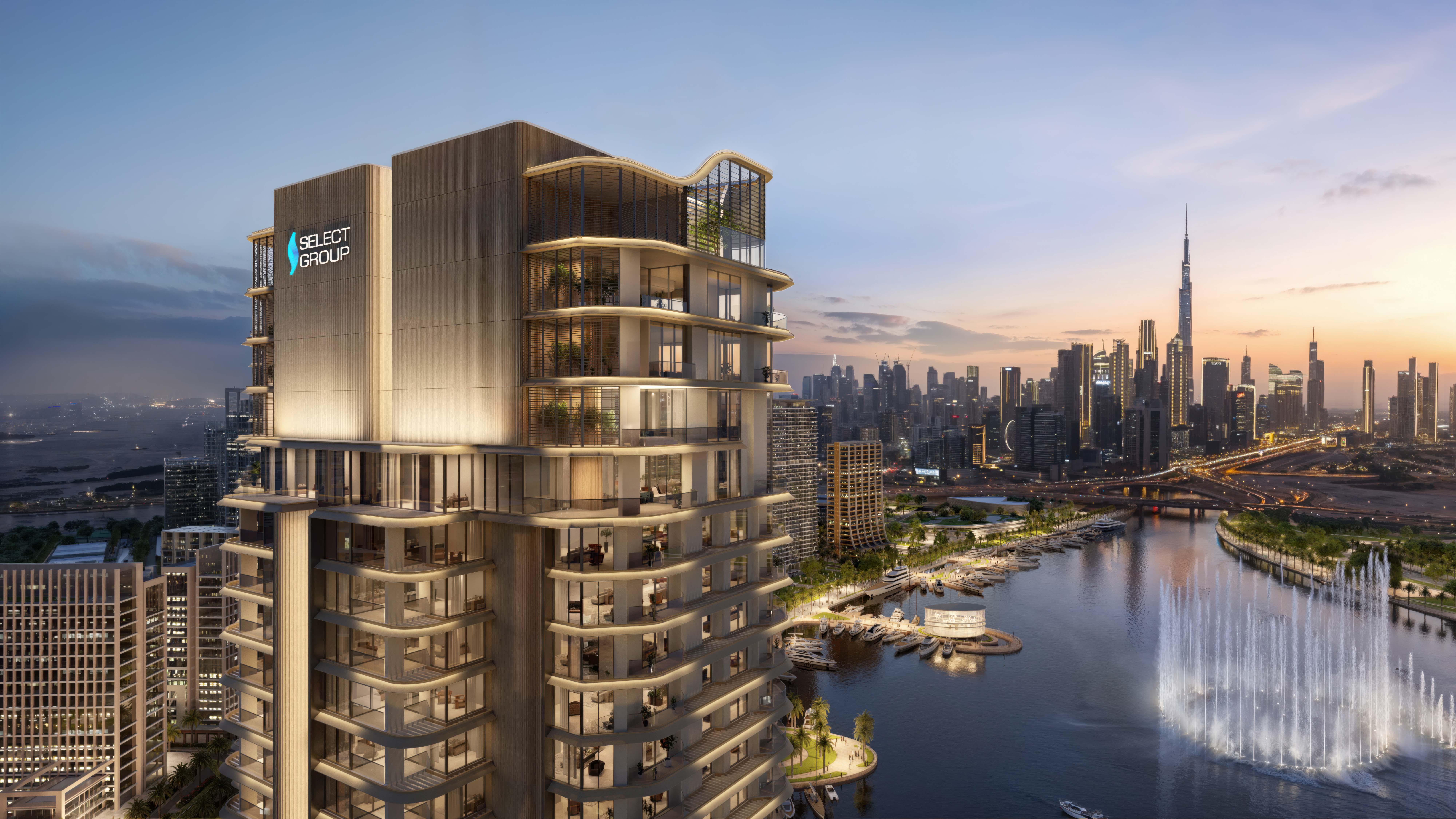
At Select Group, we develop residential communities across Dubai that meet the full range of what today’s buyer is looking for — quality of construction, design integrity, location, and long-term investment value. Our current portfolio includes a range of homes across Artistry One Residences and Artistry Two Residences — entry points that, under the updated rules, now come with an automatic pathway to two-year residency for sole purchasers.
Whether you are buying your first property in Dubai or expanding an existing portfolio, the new residency framework adds a layer of long-term value that goes beyond the asset itself. Owning a Select Group home has always meant joining a community designed for the way people actually want to live. Now, it also means laying the groundwork for a life built here.
→ Explore our available properties in Dubai
A Closing Note on What Dubai Continues to Get Right
Few places in the world iterate on their investment environment with the consistency and clarity that Dubai does. The removal of the property value threshold for the two-year visa is not a dramatic reinvention — it is a precise calibration. It says: we want more people to be able to choose Dubai, and we are removing the barriers that stood in their way.
For a city that has built its appeal on openness, dynamism, and forward momentum, it is entirely in character. And for investors watching from international markets, it is one more reason to stop watching and start moving.
Frequently Asked Questions: Dubai Property Investor Visa 2026
What are the new rules for the Dubai property investor visa in 2026?
As of April 2026, the Dubai Land Department (DLD) has removed the minimum property value requirement for sole owners applying for the two-year investor residency visa. There is no longer a minimum purchase price for individual buyers. For jointly owned properties, each co-investor must hold a share worth at least AED 400,000 to qualify.
Do I need to spend a minimum amount on a property in Dubai to get a residency visa?
No — if you are the sole owner of any property in Dubai, there is no minimum value requirement for the two-year investor visa under the updated April 2026 rules. The previous AED 750,000 threshold has been scrapped for individual buyers.
What is the difference between the Dubai two-year investor visa and the Golden Visa?
The two-year investor visa is a renewable, entry-level property-linked residency with no minimum value for sole owners. The Dubai Golden Visa grants ten years of residency and requires a minimum property investment of AED 2 million. Both are issued through the Dubai Land Department.
Can two people jointly buy a property in Dubai and both get residency visas?
Yes. Under the updated 2026 rules, two co-investors can each qualify for a two-year residency visa if each person’s share of the property is worth at least AED 400,000. For example, a jointly owned property valued at AED 800,000 split equally between two buyers would satisfy this requirement.
What documents are needed to apply for the Dubai property investor visa?
Applicants need a valid title deed issued in Dubai, a passport copy, valid medical insurance, and a good conduct certificate from Dubai Police. For mortgaged or instalment-plan properties, a No Objection Certificate (NOC) from the bank or developer is also required.
Does the property need to be fully paid off to qualify for the investor visa?
Not necessarily. For properties purchased under a mortgage or instalment plan, applicants must provide an NOC from the bank or developer confirming the total amount paid, the outstanding balance, and a formal mortgage statement. For completed properties, proof that at least 50% of the property value, or AED 375,000, has been paid is required.
Which areas of Dubai qualify for the property investor visa?
The property must be located within Dubai and registered with the Dubai Land Department. This covers freehold areas including Dubai Marina, Business Bay, Downtown Dubai, Dubai Hills Estate, Palm Jumeirah, Jumeirah Village Circle, and many others. Properties in other emirates or zones such as DIFC do not qualify.
Can I sponsor family members on a Dubai property investor visa?
Yes. Eligible investors holding a two-year property investor visa can sponsor family members. Medical insurance is compulsory for all residency permit applications, including dependants.
Where can I buy property in Dubai that qualifies for the investor visa?
Any freehold property in Dubai registered with the DLD qualifies. Select Group develops residential properties in Dubai, including Artistry One and Artistry Two, which are eligible under the updated investor visa rules.
The visa information in this article is based on updated guidelines published by the Dubai Land Department’s Cube platform as of April 2026. Select Group recommends consulting a qualified legal or immigration adviser for guidance specific to your circumstances.
Select Group is one of Dubai’s leading real estate developers, with a portfolio spanning residential, mixed-use and hospitality projects across the UAE.
More blog articles

Escrow Accounts in Dubai: What Property Buyers Need to Know